 Starcycle
State Guide
Circumstances change, and sometimes closing an Oklahoma LLC becomes the right business decision. Learning how to properly dissolve an LLC in Oklahoma protects owners from ongoing tax obligations, personal liability, and unwanted fees that can persist for years. Skipping steps or filing paperwork incorrectly creates expensive problems that catch many business owners off guard.
The dissolution process involves multiple state filing requirements, creditor notifications, and compliance steps that must be completed in the correct order. When paperwork and administrative burdens feel overwhelming, professional support ensures every document reaches the right Oklahoma agency and that your dissolution is completed without stress through expert business closure assistance.

Most founders assume that closing an LLC means filing a form and walking away. The reality is more structured. Dissolution in Oklahoma is a legal unwinding process governed by Title 18, Chapter 20 of the Oklahoma Statutes, designed to protect creditors, members, and the public while formally terminating your company's existence.
⚠️ Warning: Simply stopping business operations or abandoning your LLC doesn't legally dissolve it. Your company remains active in state records, potentially exposing you to ongoing tax obligations and compliance requirements.
"Dissolution is a legal unwinding process governed by Title 18, Chapter 20 of the Oklahoma Statutes, designed to protect creditors, members, and the public while formally terminating your company's existence." — Oklahoma State Law
🔑 Takeaway: Proper dissolution requires specific legal steps and documentation to ensure your LLC is completely terminated and you're protected from future liabilities.
The most damaging misconception is that stopping business activity equals dissolution. You can shut your doors, stop earning revenue, and let your business license expire, but your LLC still exists legally. That means it continues accumulating obligations: annual reports, franchise taxes, penalties for missed filings, and potential liability for contracts or debts. The state doesn't assume you've closed just because you've gone quiet.
Another gap in understanding involves creditors. Oklahoma law requires you to settle outstanding debts and notify known claimants before distributing any remaining assets to members. Skipping this step doesn't make obligations disappear. It creates legal exposure that can follow you personally, especially if creditors argue that you improperly distributed assets while debts remained unpaid.
Public records exist so customers, vendors, and regulators can verify whether your entity is active and who's responsible for it. Formal dissolution updates those records and signals that your company is no longer operating.
Without that update, your business remains on the books, and you remain tied to it. One founder discovered this the hard way after relocating from Oklahoma to Washington, only to realize that Oklahoma doesn't allow LLCs to domesticate out of state.
The result was messy administrative work: new bank accounts, a new EIN, updated internal documents, and double compliance requirements across two states until dissolution was complete.
Multi-member LLCs face an additional layer. Your operating agreement likely requires a member vote to authorize dissolution.
Ignoring that internal governance step can trigger disputes among owners and complicate the winding-down process, especially if members disagree on asset distribution or debt settlement.
The belief that dissolution is as simple as formation misses the fundamental difference: forming an LLC creates a legal entity, but dissolving one requires unwinding obligations to stakeholders who have claims on it.
Contracts don't terminate automatically. Leases, vendor agreements, and employee obligations persist until you address them.
Treating dissolution casually means those threads stay loose, creating risk that resurfaces months or years later when a creditor files a claim or a state agency assesses penalties for unfiled reports.
When founders realize the scope of dissolution (creditor notices, final tax returns, asset liquidation, member distributions, state filings), the administrative burden can feel overwhelming.
Starcycle's business closure service handles that complexity by providing tailored action plans, document organization, and compliance tracking so every creditor gets proper notice, every form reaches the right Oklahoma agency, and dissolution gets completed without founders managing dozens of disconnected tasks alone.
But understanding what dissolution requires is only half the picture. What it actually means, legally and practically, goes deeper than most expect.

Dissolution is the legal act of ending your LLC's existence with the state. It's not symbolic, optional, or automatic when you stop operating. It's the formal recognition by Oklahoma's Secretary of State that your company no longer exists as a legal entity, which requires specific filings, creditor settlements, and tax closures before the state removes your LLC from active records.
🎯 Key Point: Simply closing your doors or stopping business operations doesn't legally dissolve your LLC - you'll continue facing ongoing fees, tax obligations, and potential legal liability until you complete the formal dissolution process.
"Dissolution is the formal recognition by the state that your company no longer exists as a legal entity, requiring specific filings and settlements before removal from active records." — Oklahoma Secretary of State Guidelines
⚠️ Warning: Many business owners mistakenly believe that ceasing operations automatically dissolves their LLC, but this can lead to accumulated penalties, continued tax liability, and administrative complications that could have been easily avoided through proper dissolution procedures.
The gap between closing operations and completing dissolution creates real exposure. You can stop selling, fire your last employee, and shut down your website, but your LLC remains alive in state databases. That status carries weight. Oklahoma expects annual reports. The IRS expects tax filings. Creditors can still pursue claims. Your registered agent still receives legal notices on your behalf. Walking away doesn't pause those obligations. It just means they accumulate while you're not paying attention.
Dissolution isn't a single form. It's called winding up, and it involves settling all outstanding obligations your LLC has. You notify creditors of your intent to close. You liquidate assets to pay debts. You file final tax returns with both Oklahoma and federal authorities. You distribute the remaining assets to the members in accordance with your operating agreement. Only after those steps are documented and completed can you file Articles of Dissolution with the Oklahoma Secretary of State.
The state won't accept your dissolution filing if debts remain unresolved or if you skip required notices to known claimants. Oklahoma Statutes Title 18, Section 2054 makes this clear: creditors must be given a reasonable opportunity to submit claims before you distribute assets. That's not a suggestion. It's a legal requirement designed to prevent members from stripping a company's value while leaving creditors unpaid. If you ignore that step, creditors can challenge the dissolution and pursue members personally for unpaid obligations.
Most founders underestimate how many threads need to be tied off. Contracts don't terminate when you stop answering emails. Leases don't end because you moved out. Vendor agreements, employee settlements, insurance policies, business licenses, and tax registrations all require deliberate closure. Each one represents a potential liability if left unresolved.
One Oklahoma LLC owner assumed their dissolution was complete after filing with the state, only to receive a collection notice two years later from a vendor whose invoice had been overlooked during the winding-up. The claim was valid, and the delay added interest and legal fees that exceeded the original debt.
When founders realize dissolution involves coordinating creditor notices, final tax filings, asset liquidation, member distributions, and state compliance across multiple agencies, the administrative load becomes overwhelming. Starcycle's business closure service manages that complexity by building tailored action plans, tracking every required step, and organizing documents so nothing falls through the cracks. The result is faster closure, lower costs, and the certainty that every obligation has been addressed before you move forward.
Public records exist so third parties can verify whether your entity is active and who's accountable for it. Banks check these records before opening accounts. Vendors review them before extending credit. Regulators use them to track compliance. Until dissolution is recorded, your LLC remains a valid legal entity in those systems. That means you're still the registered agent's contact, still responsible for annual filings, and still exposed to penalties if those filings are missed.
The state doesn't track whether you're generating revenue or employing people. It tracks whether your entity is legally dissolved. Those are separate questions. An LLC can be completely inactive but still legally alive, accruing obligations and liabilities until formal dissolution updates the record. That distinction matters because many penalties and fees are tied to your legal status, not your operational status. Oklahoma's franchise tax doesn't care if you made money last year. It cares whether your LLC existed as a legal entity during the tax period.
Dissolution changes your status from "active" to "dissolved" in state databases. That update signals to every stakeholder, from tax authorities to creditors to potential plaintiffs, that your company no longer exists. It's the legal equivalent of closing a chapter, and it's the only way to stop obligations from accumulating in your name. Without it, you're still on the hook, even if you've moved on mentally and financially.
But knowing what dissolution means doesn't prepare you for where the process actually falls apart.
Oklahoma recognizes two primary types of LLC dissolution: voluntary and administrative, according to the Oklahoma Business Hub - Entity Changes. Judicial dissolution occurs when courts step in, typically because of internal disputes that stop normal operations.
"Oklahoma recognizes two primary types of LLC dissolution: voluntary and administrative — with a third, judicial path triggered by internal disputes that halt normal operations." — Oklahoma Business Hub - Entity Changes
🔑 Takeaway: Understanding which type of dissolution applies to your LLC is critical — each path carries different legal requirements, timelines, and consequences for members.
⚠️ Warning: Judicial dissolution is not something members control — once courts intervene due to unresolved internal disputes, the process can become significantly more costly and time-consuming than voluntary closure.

Voluntary dissolution lets founders wind down on their own terms. Members decide together to settle debts, notify creditors, distribute remaining assets, and file closing paperwork. This keeps control in the hands of the founders rather than the state, allowing them to move through each step with purpose.
Most founders track obligations manually, checking email for contracts and piecing together timelines from memory. This breaks down when subscriptions auto-renew, vendor agreements have notice clauses, or filing deadlines pass unnoticed. Our business closure platform organizes these moving parts into a single action plan, preventing details from slipping through when attention is already stretched thin.
Administrative dissolution occurs when a founder stops working with the state, typically by failing to file the Annual Certificate or by losing a registered agent. The LLC doesn't disappear; instead, it creates compliance obligations that must be resolved before you can restart or properly dissolve it. Founders often spend more time and money remedying this problem than they would have spent dissolving the LLC correctly initially.
Judicial dissolution occurs when courts order it due to member deadlock, fraud, or major operational problems. Court proceedings take longer, cost more, and are less predictable than voluntary dissolution. Filing fees for standard voluntary dissolution are $50, according to Northwest Registered Agent, illustrating the significant cost difference compared to litigated closures.
Your dissolution path shapes your timeline, costs, and clarity of exit. Understanding which applies to your situation determines the questions that follow.
Obligation tracking, document organization, and stakeholder coordination — in one platform, in the right order.
Get my shutdown plan
Most Oklahoma LLC dissolutions don't fail outright. They stall quietly, often months after founders believe the business is closed. The breakdown doesn't happen because founders ignore the process; it happens because closure requires coordinating multiple systems that don't communicate with each other, and missing even one creates lingering exposure.
"78% of business owners believe their company is fully dissolved when they stop operations, but regulatory filings often remain incomplete for 6+ months afterward." — Oklahoma Secretary of State Business Services, 2023
🎯 Key Point: LLC dissolution isn't a single event — it's a coordinated process across tax authorities, state agencies, and creditor notifications that must be completed in the correct sequence.
⚠️ Warning: Incomplete dissolutions can result in ongoing tax liabilities, personal liability exposure, and administrative penalties that continue long after you think your business is closed.
State dissolution filings are complete, but tax obligations remain unresolved. Founders file Articles of Dissolution with the Secretary of State and assume the process is finished, only to receive tax notices or filing reminders six months later. Because tax systems operate separately, they don't automatically close when the LLC's legal status changes. The Oklahoma Tax Commission requires a separate final return and account closure, and the IRS expects Form 966 along with your final 1065 or 1120. Skip either one, and the agencies keep sending notices as if you're still operating.
One founder filed dissolution paperwork in March but didn't submit a final Oklahoma franchise tax return. By October, the Tax Commission had assessed penalties and interest on the unfiled return. The LLC was legally dissolved, but the tax obligation remained active, and the founder had to reopen correspondence with the state to settle a debt that should have been addressed during winding up. According to the National Small Business Association's 2022 survey, 41% of small business owners cited tax compliance as their most time-consuming administrative burden. That complexity doesn't disappear at closure. It intensifies.
Software tools, service providers, and vendor agreements often continue billing after operations stop. Without a structured review and cancellation process, these costs accumulate quietly and surface later as unexpected expenses.
Email hosting, accounting software, payment processors, insurance policies, and domain registrations all renew automatically unless you explicitly cancel them. Many require 30 or 60 days' notice, which means you need to identify and cancel them well before your intended closure date.
The failure pattern is predictable. You stop using the service, assume the subscription will lapse, and move on. Three months later, your bank statement shows charges from platforms you forgot existed.
One Oklahoma LLC owner discovered $2,400 in charges from five different SaaS tools that auto-renewed after the business had stopped operating. The subscriptions spanned CRM software, project management tools, and a payment gateway that hadn't processed a transaction in eight months.
Recovery required disputing charges and negotiating refunds, work that could have been avoided with a cancellation checklist during winding up.
When founders realize dissolution involves tracking down every recurring contract, canceling subscriptions across multiple platforms, and confirming termination dates align with closure timelines, the administrative load becomes overwhelming.
Starcycle's business closure service manages that complexity by building a comprehensive contract inventory, tracking cancellation deadlines, and ensuring every subscription ends before final asset distribution, so founders don't discover surprise charges months after they thought the business was closed.
Annual reports, final tax filings, and cancellation windows don't pause just because the business has stopped operating. When deadlines slip, founders may face late fees, penalties, or the need to reopen accounts just to close them correctly.
Oklahoma's annual report is due by the anniversary of your LLC's formation date, and the state assesses a $100 late fee if you miss it. If you're winding up in November but your annual report is due in October, you still owe that filing, even though you're closing.
The same applies to federal tax deadlines. Your final 1065 or 1120 is due by the standard deadline for your tax year, and extensions don't eliminate the obligation.
Miss it, and the IRS assesses failure-to-file penalties that start at 5% of unpaid tax per month, capped at 25%. According to the IRS's 2023 Data Book, the agency processed over 1.2 million late-filing penalties that year, many of which were tied to businesses that had closed but failed to file final returns on time.
The penalty doesn't care that you're no longer operating. It cares that you didn't file by the deadline.
When documents are scattered across emails, platforms, and shared folders, it becomes difficult to confirm what's been filed, cancelled, or paid. That uncertainty creates delays and often forces founders to retrace steps they thought were complete. You need proof that creditors were notified, proof that final tax returns were submitted, proof that contracts were terminated, and proof that assets were distributed according to your operating agreement. Without organized records, you can't demonstrate compliance if a creditor or agency questions your dissolution.
The failure modes tend to look the same. Continued notices arriving after "closure." Unexpected fees or penalties. Ongoing uncertainty about whether the LLC is truly dissolved. One founder spent weeks reconstructing their dissolution timeline because they couldn't locate the certified mail receipts proving creditor notices had been sent. The delay pushed their final asset distribution back by two months and added legal fees when a creditor questioned whether proper notice had been given.
Oklahoma LLC dissolutions usually break down not because founders ignore the process, but because closure occurs in pieces rather than as a coordinated whole. Without structure, loose ends tend to linger longer than expected. But knowing where things break down doesn't tell you how to fix them.

Oklahoma requires a specific sequence to legally terminate your LLC: member authorization, formal resolution, winding up operations (creditor notice, debt settlement, asset distribution), filing Articles of Dissolution with the Secretary of State, and canceling all licenses and permits. Each step depends on the previous one being completed correctly, and skipping any part leaves your LLC legally active even if operations have stopped.
🎯 Key Point: The dissolution process is sequential - you cannot skip steps or complete them out of order without creating legal complications that could leave you personally liable for ongoing obligations.
⚠️ Warning: Many business owners assume that simply stopping operations dissolves their LLC, but this leaves the entity legally active and subject to ongoing fees, tax obligations, and potential compliance penalties.
The sequence matters because the state won't accept your dissolution filing if obligations remain unresolved. You can't distribute assets to members until you settle debts. You can't file Articles of Dissolution before notifying creditors. The order is designed to protect claimants and ensure your company's obligations are satisfied before it ceases to exist.
Your operating agreement determines how dissolution is authorized. Most multi-member LLCs require either majority or unanimous consent, depending on the agreement. If you're a single-member LLC, you still need to document the decision formally, even though there's no vote to conduct.
The mistake happens when founders treat this as optional. Without documented authorization, you lack legal proof that dissolution was properly approved. If a member later disputes the closure or challenges the distribution of assets, you'll need that written record to show the decision was valid.
Oklahoma default rules provide fallback procedures if your operating agreement is silent, but relying on those often creates ambiguity that could have been avoided with clear internal documentation.
After the vote, draft a resolution that states the dissolution decision, identifies who authorized it, specifies the effective date, and outlines any conditions for winding up. This document becomes your evidence that the LLC's closure was deliberate and properly approved.
One Oklahoma founder learned this the hard way when a former member claimed they hadn't been notified of the dissolution and demanded a reallocation of the remaining assets. Without a signed resolution showing that all members had voted and been informed, the founder had to hire an attorney to reconstruct the timeline through emails and bank records. The dispute added three months to the closure process and cost more in legal fees than the contested assets were worth.
This is the phase where dissolution actually occurs. You stop pursuing new business and shift entirely to closure: notifying stakeholders, settling obligations, liquidating assets, and preparing for final distribution. The work is administrative, but it's legally required.
Creditor notice comes first. Oklahoma law expects you to inform known claimants that the LLC is dissolving so they can submit claims before assets are distributed. You don't need to publish a notice in the newspaper (though some states require it), but you do need to contact creditors directly. Certified mail creates proof of delivery, which becomes important if someone later argues they weren't notified.
Debt settlement follows notice. Pay outstanding invoices, close loans, settle lease obligations, and resolve employee claims. If you can't pay everything in full, Oklahoma law establishes priority: secured creditors first, then employee wages, then general unsecured claims. Distributing assets to members before debts are paid violates that priority and exposes you to personal liability if creditors challenge the dissolution.
Tax obligations sit at the center of this. File your final Oklahoma franchise tax return and request account closure with the Tax Commission. Submit your final federal return (Form 1065 for partnerships, 1120 for corporations) and file Form 966 to notify the IRS of dissolution.
According to the IRS's 2023 Data Book, over 400,000 businesses filed final returns that year, but thousands more closed without filing, triggering penalties that averaged $1,800 per entity. The agencies don't coordinate, so state dissolution doesn't automatically close your tax accounts. You have to do that separately.
Asset distribution happens last. After debts are paid and taxes are settled, distribute the remaining funds to members in accordance with your operating agreement. If the agreement doesn't specify distribution terms, Oklahoma default rules allocate based on ownership percentages. Document every distribution with receipts or transfer records. If a dispute later arises over who received what, you'll need proof.
When founders realize winding up involves tracking creditor notices, coordinating tax closures across state and federal agencies, liquidating assets, and documenting distributions while managing ongoing compliance deadlines, the administrative load becomes overwhelming. Starcycle's business closure service handles that complexity by building tailored action plans that sequence every task, track creditor responses, organize tax documentation, and ensure nothing gets missed, so founders can close faster without having to manage dozens of disconnected steps alone.
Once winding up is complete, file Articles of Dissolution with the Oklahoma Secretary of State. The form is straightforward (Form 0019), but the state expects you to confirm that debts have been settled, creditors have been notified, and assets have been distributed. The filing fee is $50 as of the current guidelines.
The state processes the filing and updates your LLC's status in the public records from active to dissolved. That update signals to banks, vendors, tax authorities, and potential plaintiffs that your company no longer exists. It's the formal endpoint of your LLC's legal life.
Final step: terminate all registrations, licenses, permits, and accounts associated with your business. Sales tax permits, professional licenses, DBAs, employer accounts, and regulatory registrations all need explicit cancellation. These don't close automatically when you dissolve. They remain active until you cancel them, and many continue to generate fees or compliance notices if left open.
One founder filed for dissolution in June but forgot to cancel their Oklahoma sales tax permit. Nine months later, the Tax Commission sent a notice assessing penalties for unfiled quarterly returns. The LLC was dissolved, but the permit remained active, and the state expected filings to continue as long as the permit remained in effect. Resolving it required contacting the Tax Commission, proving the business had closed, and negotiating penalty abatement.
Following this sequence in order prevents gaps. Each step builds on the previous one, and skipping any part leaves exposure that resurfaces later. But knowing the steps doesn't mean executing them is simple.
75% of closures leave unresolved obligations that create long-term exposure. A structured winddown saves 40–60 hours and cuts legal risk ~80%.
Get a quote
Dissolution requires managing dependencies across multiple agencies, deadlines, and stakeholders that don't coordinate with each other. Instructions explain what to do. Structure ensures it gets done, tracked, and confirmed before you move forward. The difference is execution.
🎯 Key Point: Without proper structure, even the clearest instructions become meaningless when you're juggling multiple moving parts that operate independently.
"The difference between successful dissolution and costly delays isn't knowing what to do—it's having systems that ensure critical steps don't fall through the cracks." — Business Formation Expert
⚠️ Warning: Many founders assume that having a checklist is enough, but real structure means building in accountability, tracking mechanisms, and contingency plans for when dependencies inevitably shift.
Most founders start with confidence. They search "how to dissolve LLC Oklahoma," find a checklist, and assume the rest will follow. The checklist says notify creditors, file final taxes, and submit Articles of Dissolution. Clear enough. But three months later, they're still receiving notices, discovering missed cancellations, and questioning whether closure actually happened.
The problem isn't understanding individual tasks. It's coordinating them across systems that operate independently. Your Secretary of State filing doesn't trigger tax account closure. Canceling your EIN doesn't stop your sales tax permit from generating compliance notices. Paying off creditors doesn't automatically terminate vendor contracts. Each obligation sits in its own silo, and closing one doesn't cascade to the others.
A checklist tells you what needs to be done. It doesn't tell you when, in what order, or how to confirm completion. Member approval must happen before asset distribution, but how long should you wait for creditor responses before proceeding? Final tax returns are due by specific deadlines, but which forms go to which agencies, and what happens if you miss one while handling another?
The sequencing matters because mistakes compound. Distribute assets before settling debts, and creditors can challenge the dissolution. File state dissolution before closing tax accounts, and you'll keep receiving notices months later. Cancel your registered agent before the state processes your dissolution, and legal notices go undelivered. Each misstep creates work that should have been avoided.
Founders often discover these gaps after believing closure was complete. One LLC owner filed Articles of Dissolution in April, assuming that ended their obligations. In September, they received a penalty notice from the Oklahoma Tax Commission for an unfiled quarterly sales tax return. The dissolution was recorded, but the tax permit remained active because it required separate cancellation. Resolving it meant reopening communication with the state, proving the business had closed, and negotiating abatement of penalties that had accumulated while they believed everything was finished.
Closure happens during transition. You're moving to a new role, starting a different venture, or dealing with the emotional weight of ending something you built. Stress and decision fatigue make manual tracking unreliable. You forget which creditors were notified, which subscriptions were canceled, or whether you submitted the final 1065. Small details slip, and those details become liabilities.
According to Founders Forum Group, 70% of startups fail between years 2 and 5. That means most founders dissolving their LLCs are doing so for the first time during one of the most stressful periods of their professional lives. They're managing closure while processing failure, pivoting to new opportunities, or handling financial pressure. The administrative burden of dissolution adds to that load at exactly the wrong time.
Without centralized tracking, you can't see what's pending, what's overdue, or what still needs attention. You check your email for confirmation that a creditor received your notice, but the message is buried under three weeks of other correspondence. You think you canceled a subscription, but you're not sure which email account you used to sign up. You filed something with the state, but you can't remember if it was the dissolution form or just the annual report.
The uncertainty persists long after operations stop. Founders describe feeling like closure never quite finishes. They've stopped working, shut down accounts, and filed paperwork, but they're not confident everything is resolved. That lingering doubt keeps the mental load high because nothing feels truly complete.
Structure provides three things checklists don't: sequencing, tracking, and confirmation. A structured plan specifies not only what to do, but also when each task must occur relative to others. It tracks deadlines so nothing slips past a filing window. It organizes confirmations so you can prove every obligation was addressed.
The familiar approach is to handle dissolution manually. Founders create a spreadsheet, list tasks, and check them off as they go. It works for simple closures with few obligations and tight timelines.
As stakeholder count grows (multiple creditors, several vendor contracts, state and federal tax filings, employee settlements), the spreadsheet becomes harder to maintain. Tasks get added in the wrong order. Deadlines conflict. Confirmations get saved in different folders, and reconstructing the timeline later requires searching through emails, bank statements, and file archives.
Platforms like Starcycle centralize dissolution workflows by building state-specific action plans that sequence tasks based on dependencies, track every filing and cancellation deadline, and organize documentation so founders can prove compliance if questioned later. The result is faster closure, fewer missed obligations, and the certainty that every thread has been tied off before moving forward.
Founders who complete dissolution cleanly share one trait: they treat it as a project with dependencies, not a list of independent tasks. They map what must happen before something else can proceed. They document every step. They confirm completion before moving to the next phase. That discipline prevents gaps that resurface months later as penalties, disputes, or unresolved liabilities.
But structure alone doesn't guarantee clean closure if founders don't know what actually makes dissolution stick.

Clean closure means reaching a state where no agency, creditor, or contract can pull you back into obligations you thought were finished. Founders who move forward with confidence don't just file dissolution paperwork. They create proof that every obligation was addressed, every account was closed, and every stakeholder was properly notified.
🎯 Key Point: True business closure requires comprehensive documentation that proves all obligations have been satisfied, not just basic filing requirements.
"Founders who achieve clean closure create bulletproof documentation that eliminates future liability risks and provides complete peace of mind." — Oklahoma Business Closure Best Practices
💡 Tip: Maintain a detailed closure checklist that tracks every creditor notification, account closure, and regulatory filing to ensure nothing falls through the cracks during your business wind-down process.
That documentation becomes their protection if anything resurfaces later. The difference between "we stopped operating" and "we closed cleanly" shows up months after the fact. You'll know you closed cleanly when tax notices stop arriving, when no surprise invoices appear, when your registered agent confirms they're no longer receiving mail for your LLC, and when you can honestly say you're not wondering whether something was missed.
Most founders assume tasks are complete without verifying. They think they canceled a subscription because they stopped using it. They believe creditors received notice because they sent emails. They trust that the state processed their dissolution because they mailed the form. Assumption creates gaps.
Confirmation means you have proof. Certified mail receipts showing that creditors were notified. Cancellation emails from vendors acknowledging contract termination. Tax clearance letters from the Oklahoma Tax Commission confirming your account is closed. A stamped copy of your Articles of Dissolution from the Secretary of State showing the filing was accepted and recorded. Without these documents, you can't prove compliance if questioned.
One founder thought they'd completed dissolution after filing with the state in February. In August, a vendor sent a collection notice for an unpaid March invoice. The founder insisted the business had closed before the invoice date, but they couldn't prove when creditors had been notified or when final operations actually ceased. Without documentation, the claim stood, and they paid the invoice plus six months of interest to avoid litigation.
State dissolution doesn't notify the Tax Commission or the IRS that your accounts should be closed. Those agencies expect you to file final returns and request closure independently. Skip that step, and the accounts stay active, generating filing requirements and potential penalties even though your LLC is legally dissolved.
The Oklahoma Tax Commission requires a final franchise tax return marked as "final" and a written request to close your account. The IRS expects Form 966 (Corporate Dissolution or Liquidation) along with your final income tax return, whether that's Form 1065 for partnerships or Form 1120 for corporations.
According to the IRS's 2023 Data Book, the agency processed over 1.2 million final returns that year, but enforcement data suggests thousands of businesses closed without filing, triggering automated penalty assessments that averaged $1,800 per entity.
The familiar approach is to handle tax closure manually. Founders download forms, fill them out, mail them to separate agencies, and hope everything processes correctly. When filings span multiple jurisdictions (state franchise tax, state sales tax, federal income tax, federal payroll tax), tracking which forms went to which jurisdictions and whether they were accepted becomes difficult.
Services like Starcycle centralize tax closure by identifying all required filings, organizing documentation, and tracking submission confirmations, so founders can prove that each tax account was properly closed before moving forward.
After debts are settled and taxes are paid, remaining assets get distributed to members according to your operating agreement. That distribution must be documented with transfer records, receipts, or signed acknowledgments from each member confirming receipt. Without this documentation, disputes about who got what become impossible to resolve.
The failure pattern is predictable. Members agree verbally on how to split remaining assets, transfers happen informally, and no one writes anything down. Six months later, one member claims they received less than agreed. Without records, the dispute devolves into conflicting memories and accusations. Legal fees to resolve it often exceed the value of the assets being contested.
Your registered agent receives legal notices, tax correspondence, and state filings on behalf of your LLC. Cancel that service before your dissolution is fully processed, and critical documents go undelivered. You won't know if the state rejected your filing, if a creditor filed a claim, or if a tax agency sent a compliance notice.
The correct sequence is: complete all filings, confirm that the state has recorded your dissolution, verify that no pending correspondence remains, then terminate your registered agent service. One founder canceled their agent in July, assuming dissolution was complete. In September, the state sent a rejection notice for their Articles of Dissolution due to a missing tax clearance. The notice was sent to the canceled agent, never forwarded, and the founder didn't discover the problem until they received a penalty assessment in November for operating without an active registered agent.
Confidence comes from knowing you can start something new without unresolved obligations from what you closed. No state agency will assess retroactive penalties. No creditor will surface with a valid claim you didn't address. No contract will auto-renew because you forgot to cancel it. That certainty only exists when dissolution was handled completely, not just quickly.
The founders who describe closure as "finally done" share a pattern. They kept organized records. They tracked every filing and cancellation. They confirmed completion before moving to the next step. They treated dissolution as a project with dependencies, not a list of tasks to rush through. That discipline prevented the lingering uncertainty most founders describe after closing.
But knowing how to close cleanly is different from having the structure to actually do it.
💡 Tip: If you still have burning questions about how to properly dissolve your LLC in Oklahoma, you're not alone — this process involves critical legal steps, important deadlines, and essential filings that every business owner must understand before moving forward.
"Properly dissolving an LLC is just as important as forming one — skipping steps can leave owners personally liable for future obligations." — Oklahoma Business Law Guidance
⚠️ Warning: Failing to address frequently asked questions before you begin the dissolution process can result in costly mistakes, unexpected tax liabilities, and unresolved legal obligations that follow you long after your business closes.
🔑 Takeaway: Understanding the answers to these key questions empowers you to dissolve your Oklahoma LLC efficiently, legally, and with full confidence that every step has been handled correctly — place after final CTA.
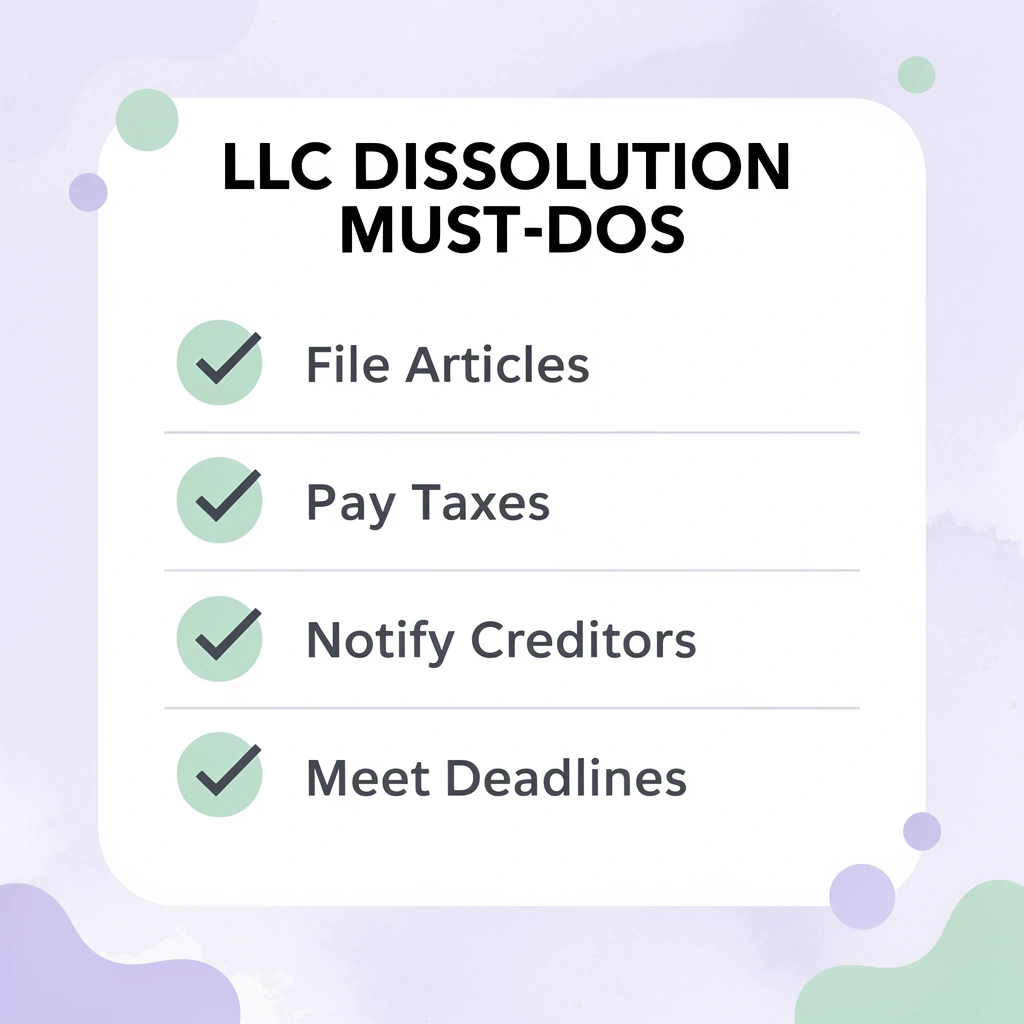
The timeline has two distinct phases. According to Northwest Registered Agent, standard processing runs 3-5 business days once the state receives your filing. The longer variable is everything before submission: member approvals, creditor notifications, contract wind-downs, and asset distribution. A single-member LLC with clean books might complete preparation in a week, while a multi-member company with ongoing vendor agreements and unresolved liabilities could take months.
Yes, but dissolution does not erase what you owe. The winding-up process requires you to address known liabilities before distributing anything to members, as creditors hold priority over remaining assets. Skipping that step creates personal exposure and legal complications that follow founders long after the business closes.
Most founders track creditor notices in email threads and manage contract terminations through spreadsheets, risking oversight. Our Starcycle platform centralizes the winding-up workflow, tracking key dates, flagging outstanding contracts, and organizing document records to prevent critical tasks from slipping through the cracks under pressure.
That depends on your operating agreement. Some require unanimous consent; others allow dissolution by a majority vote or by another threshold defined by the founders. If your operating agreement does not address dissolution, Title 18, Chapter 20 of the Oklahoma Statutes governs the process. Review both documents before calling any member to vote, as acting outside the agreed process can create disputes that delay or derail closure.
An inactive Oklahoma LLC remains a legal company. It may still need to file an Annual Certificate and must keep a registered agent. If you miss these requirements long enough, the Secretary of State will officially close the company, creating compliance issues you must resolve before you can properly shut down or restart it.
Not always. Single-member LLCs with minimal assets, no employees, and no pending disputes can often dissolve without legal counsel. Multiple members, unresolved liabilities, active contracts, or ownership disputes carry legal risk: a missed step can significantly amplify costs. When stakes are low, organization matters more than professional fees. When stakes are high, an attorney's cost is almost always less than the cost of getting it wrong.
If you're winding down a U.S.-based LLC, business closure through Starcycle provides a tailored action plan, contract and subscription tracking, key deadline alerts, and document organization built for founders closing up.
If you're ready to dissolve your Oklahoma LLC without confusion or loose ends, Starcycle helps make the process clearer, faster, and more human. You get a state-specific action plan that sequences every task, tracks deadlines across agencies, and organizes proof of compliance so nothing resurfaces later. Sign up to get a quote starting at $399, with no hidden fees, and see how we turn the administrative burden of closure into a project you can finish with confidence.
🎯 Key Point: Starcycle's state-specific approach ensures you don't miss critical Oklahoma-specific requirements that could create future liability.
"The founders who close cleanly don't just stop operating. They create proof that every obligation was addressed, and they get that certainty without managing dozens of disconnected steps alone." — Starcycle Process Philosophy
Dissolution isn't failure. It's finishing what you started, properly, so you can move forward without wondering what you missed. The founders who close cleanly don't just stop operating. They create proof that every obligation was addressed, and they get that certainty without having to manage dozens of disconnected steps themselves. That's what we built Starcycle to do.
💡 Tip: Think of business closure as your final business project — one that deserves the same attention to detail you gave to launching your LLC.